Detlefsen og Unmarck Kjeldsen: Fat Front

Still: I byen er der ingen anerkendelse…

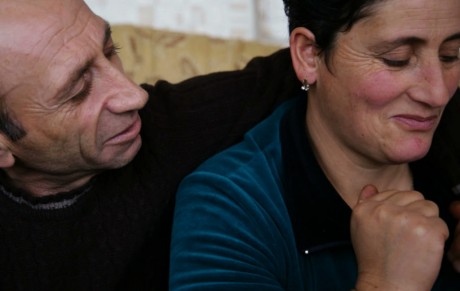
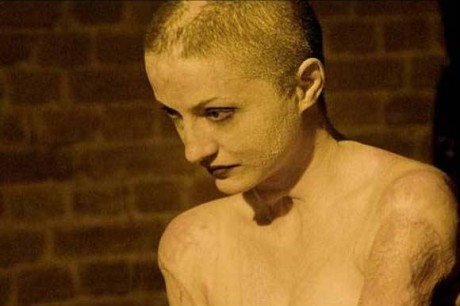
Louise Detlefsens og Louise Unmarck Kjeldsens film Fat Front har premiere i biograferne i dag. Gå i biografen og se den! Det er en dejlig film. Fornem journalistik, gribende filmscener, elegant klipning, bevægende klogt indhold, fire energiske medvirkende, som med svingende følelsesindhold aldrig taber intensitet.

Sammen med instruktørerne VIL de dette budskab som sammenfattes allerede i titelfrekvensen i en dialog mellem den første af de stolte medvirkende og hendes forsigtige veninde of screen i kabinen på en skilift som jeg ser på vej op i højderne. Replikker på klart klingende norsk:

Synes du jeg er tyk? / Nej. / Men hvis du skulle beskrive min krop? / Jeg ved ikke, hvilket ord jeg kan bruge… Jeg ville nok sige: “Hun er lidt kraftig.” / Kraftig? Det giver mig et billede af mig selv som en kampesten. / Kraftig bygget? / Det er jeg ikke. Det er jeg virkelig ikke. Overhovedet ikke. / Hvad med rund? / Det passer jo til en snemand. Jeg synes det er den værste gang bullshit. / Jeg forsøger at skåne dig. / Ja, men… Der er ikke nogen bedre beskrivelse end ordet tyk. For det er det jeg er. Ja, jeg er tyk. 

Og hun stiger ud af kabinen, ja, hun er tyk. Veninden, som så ikke er tyk, bagefter. Hun går forrest opad i den høje sne, kraftfuldt, kendt med dette forhold i fjeldet, stiller sig glad og breder armene ud mod den vide udsigt og råber:

Hallo Verden, kan du høre mig? Jeg er tyk! Jeg er tyk og jeg er totalt ligeglad! 

Still: I naturen er der fuld anerkendelse…

Ja, den her dejlige frigjorte film er selvfølgelig ikke et søgende, tvivlende essay, den er fra begyndelse til slut og hele vejen igennem en selvbevidst og overbevisende pamflet. 

Og den har levet i mit hovede, i hele kroppen faktisk gennem nogle dage, hvor jeg har vendt og drejet min opfattelse og jeg ved det vil blive ved. For filmen er en tekst, et budskab som vil overbevise, en tekst som har ændret mig, den er en pamflet som virker.

Jeg skriver derfor lige her, lige her i Filmkommentaren ordet FED for sidste gang, fra nu er ordet TYK… Der er ikke en venlighed til forskel, der er en viden om historien og kulturerne og mennesket til forskel. En ny viden jeg ikke vidste jeg ikke havde.

Still: I det rette element… vægtløs.

Jørgen Leth

The shortest but most eye-catching and heart-warming paragraph in a press release that came in some minutes ago goes like this:

”Lifetime Achievement Award: Jørgen Leth
From his influential short film The Perfect Human (1967) through to today, Jørgen Leth inspired generations of filmmakers with his strong auteur voice and fearless perspective on reality. Based in Denmark and Haiti, Leth was never hampered by concerns of veracity and fact. In celebration of his extraordinary filmmaking, IDFA is delighted to award the 83-year-old director with a Lifetime Achievement Award during the festival.”

And if you want to read (more) about Jørgen Leth, click here:

http://www.filmkommentaren.dk/blog/blogpost/2198/

articles in Danish (use google translate, works ok) and English

DOK Leipzig: The Brothers Quay

Bravo DOK Leipzig! Having a special program with The Brothers Quay is a scoop. They come to the festival, they meet the audience to talk about their work and they have made three trailers for the festival, click below and you can watch them. Fascinating pieces of art they are. 30 seconds each, entitled CYCLOPS, MATHS and ZAMECZNIK, the latter must be a reference to the Polish artist with the first name Wojciech.

I am old enough to have seen the films of the Brothers on several occasions – when I was selecting films for the Odense Film Festival together with documentary director Jørgen Roos and journalist Mogens Damgaard Rasmussen, at the festival in Clermont Ferrand and when Cinemateket in Copenhagen 10 years ago had a retrospective of their works. On that occasion we wrote an article, that introduces the Brothers, link below. Here is a quote:   

Stephen and Timothy Quay, born in 1947 (good year to be born in…), ”Influenced by a tradition of Eastern European animation, the Quays display a passion for detail, a breathtaking command of color and texture, and an uncanny use of focus and camera movement that make their films unique and instantly recognizable…”

“During the Brothers Quay Night*footnotes event on 01 November at the Schaubühne Lindenfels, the artists will provide personal insights into their work. I will be there!”

Apart from the program of this night, the Brothers have selected 8 of their films and curated a special program of films, where you find films by Matthias Müller, Vera Chytilova, another great animation artist Polish Jerzy Kucia – and, surprise, Swedish Arne Sucksdorff’s 18 minutes long masterpiece (also from 1947) “Människor i Stad” (“Rhythm of a City”).

https://www.dok-leipzig.de/en/festival/festival-news/view/festival-trailers-2019

https://www.dok-leipzig.de/en/festival/sonderreihen/brothers-quay/brothers-quay

http://www.filmkommentaren.dk/blog/blogpost/871/

Thomas Heise: Heimat is a Space in Time/ 2

Colleague Allan Berg tells me that if he loves a book, when finished he often starts reading it again immediately. My mentor Niels Jensen (who died in 2010) said the same: I often, if I love a film, leaves the cinema and walks in again to have a ticket for the next screening. Jensen, who also left a screening if he found the film boring and/or without quality… Why stay till the end?

I would have loved  to watch Thomas Heise’s film essay again right away. But I will wait for the second screening to be on a big screen, in a cinema, if not before (DOK Leipzig?) then at IDFA in Amsterdam. I want the full cinema screen with its image and sound as it was thought from the director’s side.

There is so much I want to (re)discover, so many cinematic decisions that are far from main-stream documentary storytelling.

With the whole overall ambition, to take the viewer through the history of a family, through generations from the beginning of the 20th century till today. What an ambition and what an original and succesful result!

Like a written biography it is a film in 5 chapters, indeed a piece of literature

in itself as much as it is an aesthetically balanced visual interpretation with the voice of the director reading letters, diaries, presenting documents, and let me not forget the muted tone, never pushy, never overwhelming, but always there in the background together with the eloquent voiceover.

I want to point at some of the sequences in the 1st chapter of the film – the chapter lasts one hour. Masterly montaged sequences.

The first chapter that is world history (the first WW) seen by Wilhelm Heise, the grandfather of the director, who writes as a young man about War:    

„Hand in hand with the spiritual degeneration comes the decline in ethic and morals“ … slowly emerges a photo of three soldiers posing for the camera… “Man‘s bestial nature celebrates its highest triumphs…“

Read by Thomas Heise with his voice that captures your attention here and through the film because of its kind-of-neutral character, even when the most terrible events are coming up, it stays like this – the effect is emotional strong.

But this first chapter is also a love story… between Wilhelm Heise, who lives in Berlin and Edith Hirschorn, whose family lives in Vienna. The letters are beautiful, read by Heise, while you look through a rainy window of a tram of today’s Vienna, hearing in between the automatic voice of „next station“! And hear some passenger voices and the tram’s rail music…

Edith writes a recipe. „Give it to your mother”.

And while Edith is back in Vienna, Wilhelm writes: „Just come and things will be different… in recent days I’ve been imagining this: I am sitting on the balcony and reading. Sometimes I look up. You sit at the other end of the balcony. Sometimes you also look up. We look at each other and smile…”. Yes, that’s how love is. Also in my sitting room today.

B/W images of today accompanying: U-Bahn in Berlin, a young couple hugs each other – Heise reads a letter from Max and Anna Hirschorn in Vienna telling Dr. Wilhelm Heise that they would welcome him in Vienna to become their son-in-law, the wife of their daughter Edith. (The U-Bahn scene also a ”first love scene” as the director remembers it? The film has many layers).

The sound of trains, the image of flowers in the foreground and train passing in the background, family photos of the couple with two children, Hans and Wolf(gang).

Back to historical documents, names written, Jews on lists for deportation, Heise reads the correspondance between Vienna and Berlin. ”Vater und Opa” Max Hirschhorn writes, so does Edith’s sister Elsa, about daily things, hard days and about the transport to Poland that becomes more and more actual. ”Why do we have to live in these times”. Where the Jews are not allowed to ride buses, can not get good tobacco any longer (Max complains about this), where certain areas are not good to stay in.

Montaged with around 20 minutes visual documentation – nazi deportation lists with Heise reading the correspondance. You read all these Jewish last names, you have met them on other occasions, it becomes painful as you know the fate waiting for them.  

From an aunt: “July 23. Dear Edith. Thank you for everything. Best regards to you all. Farewell. I’m travelling today. Pepita» – and you read the name on the document underligned with red: Finkel Perl Josefine Sara, 2 Körnerg. 7/15, 13.10.76, the latter her date of birth.

«Travelling today» – as the other members of Edith’s family «to Poland».

Cut to (the lyrics of) a popular song, performed by Marika Rökk during Nazi time, «Don’t look here, don’t look there – Just look straight ahead – And whatever may come – Just never mind». Sarchasm, Irony from the side of the director?

Leaving the deportation lists… long black break before Heise comes back with the personal resumé of Wolfgang Heise, the son of Wilhelm and Edith, who is a Wehrmacht soldier, like his brother Hans, writing from a barrack during the last years of the war. Words to the parents in Berlin – hope all is well.

Montaged with images from today in Eastern Germany: empty houses, forgotten nature if that is the right wording, everything is left behind, left overs, sad images, no hope and windmills that continue to move slowly, the flow of history as Wolfgang Heise mentions, not to stop.

Some steps into the first chapter, I will do the same later with the fifth chapter of this magnificent documentary reflection of a space in time.   

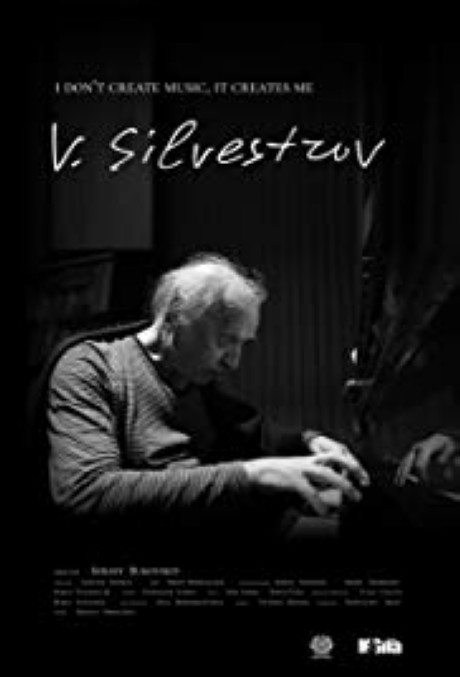
Patricio Guzmán on Arvo Pärt

IDFA has chosen Chilean director Patricio Guzmán as Guest of Honor. His films will be shown and he has been asked to make his Top Ten. At the link below you will find all 10 choices. To our pleasant choice he has chosen ”Arvo Pärt: 24 Preludes for a Fugue” that is a wonderful visit to the world of the world famous composer. Made by Dorian Supin in 2002, an Estonian as well, who is close to Pärt about whom many other documentaries have been made, in general superficial ”homages”. Guzmán writes this about Pärt:  

”This is one of many films that show the complex process of “artistic creation.” It’s a topic I often deal with in my film classes, because everyone wants to know the “secrets” of creation in general. And anyone who sees this documentary is fascinated. Arvo Pärt is a portrait of a mysterious man, who has the eyes and beard of a 12th-century prophet. The film follows Pärt over several years, during a particularly productive period of his life. He’s filmed while composing or practicing with the orchestra, and during various concerts, workshops and meetings. The director Dorian Supin has constructed the film in chapters that list the different nuances of the composer. He thus explores Pärt’s musical thoughts and inner world, and the way he conceives his music, trying to discover the secret of what makes it so captivating. Pärt was born in Estonia in 1935 but lives in Berlin. He has always sought to compose music steeped in a spirituality that seems to go back to the Middle Ages, without regard to contemporary trends. He has built a universe of sound outside of the present era. The film contains excerpts from masterpieces such as Tabula Rasa, Passio, Fratres, Orient et Occident, Cecilia, vergine romana and Como anhela la cierva.”

More Arvo Pärt is to be found in the film by Andy Sommer, Adams Passion, about the performance made by Robert Wilson and Arvo Pärt and  Günther Atteln’s The Lost Paradise, on the creation of this work. Colleague Allan Berg watched the films in 2016 and wrote three knowledgeable and enthusiastic blogposts in Danish. NB: Google Translate works fine from Danish to English.

Links to Guzmán’s Top Ten, to ”Adams Passion” and ”The Lost Paradise” and to the three texts by Allan Berg:   

https://www.idfa.nl/en/article/118859/my-selection-of-ten-films

http://www.adamspassion.de/

http://www.filmkommentaren.dk/blog/blogpost/3495/

http://www.filmkommentaren.dk/blog/blogpost/3504/

http://www.filmkommentaren.dk/blog/blogpost/3508/

IDFA: The Inheritance of War/ Thomas Heise

News from Amsterdam: A focus program at IDFA is called “It Still Hurts”. It ”presents a selection of 17 films from the last 35 years that cinematically explore the psycho-social-economic-political fallout of two world wars in particular, and the more concentrated (and clandestine) ones occurring on every continent.”

A quote from the always brilliant Pamela Cohn, who has written about the program, that is put together by IDFA’s artistic director Orwa Nyrabia. Later I will write about the program and its films. The reason for now is that Cohn writes such a precise description of one of Thomas Heise’s many cinematic solutions:

”In Thomas Heise’s brilliant, monolithic film Heimat Is a Space in Time (2019), trains are the leitmotif throughout the fractured biography of Heise’s own Jewish intellectual heritage, starting with the expulsion of family members from Vienna in the late 1930s. Heise films train after train moving back and forth across the landscapes of his memories, the machines that moved millions of soldiers and prisoners to their deaths. Eventually, they morph into conveyances for modern industry, as trainloads of new automobiles take the place of human cargo, running on the very same tracks, the very same routes, relentlessly observing strict timetables of delivery and receipt…”

Two links below, one for the series and one for Cohn’s article, read it !

https://www.idfa.nl/en/selection/118587/focus-it-still-hurts

https://www.idfa.nl/en/search?page=1&type=all&q=pamela%20cohn%20inheritance

Thomas Heise: Heimat Is a Space in Time/ 1

HEIMAT IS A SPACE IN TIME picks up the biographical pieces of a family torn apart through the end of the 19th and into the 20th century. It is about people who by chance found each other, only then to lose each other. Now it is their descendants, their children and grandchildren who are beginning to disappear.

This is all about speaking and silence. First love and happiness lost. Fathers and mothers, sons and brothers, the affairs, the hurt and the joy in landscapes of transition – each bearing the intertwining, hallmarks of their times. A collage of images, sounds, letters, diaries, notes, voices, fragments of time and space.

HEIMAT IS A SPACE IN TIME is a journey of reflection of time and the love held within using sounds, images and language. Yet some of it shall remain forever lost. The material used in this film is what remains of my family. The remnants of those I knew, whose circumstances I had been part of or had otherwise experienced. Remnants that mirror history. A history that is just as much my own. (Thomas Heise)

Germany, 2018, 218 mins.

Waad al-Kateab & Edward Watts: For Sama

Waad al-Kateab, director and the woman behind the camera, the one who filmed and produced this film, puts a question to a nurse, who sits alone in the hospital in Aleppo. What’s wrong? After a while he responds: Children have nothing to do with this! He does so a bit into a heartbreaking documentary from hell on earth, Aleppo 2016, where child after child are being rushed in to be treated after they have been hit by bombs during the siege of the city. Many of them are dead. What did children have to do with these massacres? Nothing of course. Two brothers follow their dead third brother, with despair in their eyes. Their mother arrives. Another mother shouts to her dead child “I have milk for you”. Turning around to the camera “film, film this”.

Waad al-Kateab’s husband, the doctor Hamza – what a man, one of many heroes who help the injured 24/7 – worked in one hospital that was bombed, they move and find another place to set up a hospital, in constant danger. I dream red, Waad al-Kateab, says at some point – the images show blood being swept away from the floor. Doctor Hamza is reporting to the media, Waad is a journalist, who has been sending news to Channel4. They fall in love, get married and Sama is born, to whom the mother adresses her love and hope, an intelligent storytelling solution. As a viewer you are with the little girl and her parents hoping the best for her, even if “you Sama never cries like a child normally does”. And the camera follows another family as well, where a boy does not want to leave Aleppo at the same time as he talks about the many friends, who are not there any longer. The word is kliché… but the film is full of fine poetic moments that communicate “we want to survive” and of course “we want to fight the regime of Bashar al-Assad”.

“We won’t make it”, says Doctor Hamza, the father, “the regime is only one street away”. But they do get away with the last convoy out of Aleppo after a phone call to the Doctor from a UN representative, who conveys to them “the offer” from the Russians that they can leave Aleppo. They have no choice, Waad al-Kateab is pregnant again, “our future is no longer in our hands”, “saying goodbye is worth than death”, for once you see Doctor Hamza in tears, you understand why having watched an extraordinarily strong film that jumps in time to balance the dark and the light, to make the film bearable to watch one could also say. How much horror can a viewer cope with?

The film has already received 20 awards and has just been released in the UK. Below there is a link to a fine interview with the two directors and the Doctor. In this the latter mentions that what we experienced in Aleppo is now being repeated in Idlib. “The world is just ignoring us”, “where did we go wrong”!  

USA/UK, 2019, 95 mins.

https://www.theguardian.com/film/2019/aug/25/for-sama-documentary-interview-waad-al-kateab

https://www.youtube.com/watch?v=RbmULjz1e6U

https://www.forsamafilm.com/

Nordisk Panorama Forum Day 2

I met Kim Christiansen  from DR TV Sales before the Forum started its second day at Amiralen in Malmö. I asked him which film was his best sell recently. To my pleasant surprise he said ”Cold Case Hammarskjöld” by Mads Brügger, a film with a non-mainstream storytelling, controversial also in subject, indeed a very good film, that Christiansen has sold to both broadcast and theatrical release. Brügger is a documentary director, who is mixing journalism and cinema and who likes to play with the medium.

Christoffer Guldbrandsen was the excellent journalist behind the first project

to be adressed to the decision makers. The project is confidential, the director was not present, he is in the US shooting, but I have to make a comment to what the DR commissioner Anders Bruus said, when he introduced Guldbrandsen as “an icon in Danish documentary”. God damn, he is not, as everyone could see from the trailer of the confidential journalistic project, and from his previous journalistic pieces about Danish politicians Naser Khader and Mogens Lykketoft. Icons in Danish documentary… Jon Bang Carlsen, Anne Wivel and Jørgen Leth. Carlsen was at the Forum pitching a new project at individual meetings together with his co-producers from Final Cut for Real, Signe Byrge Sørensen and Heidi Elise Christensen.

Sorry, had to get that comment out.

The second presentation – to continue my subjectivity – introduced a place, where I have been on holidays with good documentary friends from Lithuania: The beautiful Curonian Lagoon with dunes next to the Russian Kaliningrad. Using music of Estonian master composer Arvo Pärt the trailer to the film “Ribos” by Vytautas Puidokas, produced by Lukas Trimonis and with Belgian and Norwegian companies co-producing, was visual as almost all Lithuanian documentaries are, but not so clear when it comes to the story about ornithologists working on each side of the border, trying to find collaboration.

There was “Born to Struggle” by Swedish couple Nima Sarvestani and Maryam Ebrahimi, a film that has to be made. About “three post-genocide survivors”, who live inside the Kutupalang refugee camp in BanglaDesh. A film that wants to give “voice to the voiceless”. Strong trailer. Ayaz is looking for his little sister in a camp with 1,3 million refugees !

And there was Sami director Nils Gaup, who made the Oscar nominated « Pathfinder » in 1987 – edited by Danish Niels Pagh Andersen (the start of his career) – who came up with a crazy story from the art world, working title « Images of a Nordic Drama – Who is to Judge What True Art is ». Gaup talked about the « Munch Mafia » (see photo, thanks Robert Goodman), that did – and does – what it can to prevent paintings of the late Aksel Waldemar Johannesen to be exhibited, even if Much himself had talked positively about the paintings. The art collector Haakon Mehren is the man, who found Johannesen’s paintings and has organised exhibitions in Venice and wants to donate the collection to the city of Oslo. But the Munch Museum art people’s advice is « don’t accept the offer ». The trailer was full of humour that fits this absurd story that I am looking forward to see.

Staying in the art world I was also impressed by « The Choir ». Producer is the experienced, charismatic Swedish Stina Gardell with debut director Amanda Pesikan and Ellinor Hallin as cinematographer, whose work I admired last night in « Scheme Birds ». I asked my neighbour at the table in Amiralen, photographing filmmaker Robert Goodman what he thought of the camerawork in the trailer. Thumps up. And that is so important, when you are to film a choir and catch the emotions of the leader of the choir Cedwin. The film wants to take the audience behind the scene of a gospel choir to “raise questions about the human need for togetherness and spirituality ». The director has followed the choir for five years and now they are off to Chicago, the home of gospel, where Cedwin hopes that the members of the choir will understand the Christian background for the music. Conflict, drama, music.

« Fly so Far » takes us to El Salvador, where a group of women have been imprisoned because of miscarriage. Teodora is the character to carry the story. She is in her mid-thirties, was imprisoned and released in 2018, now she is an activist, who has presented the terrible stories at the European Parliament. The director, Celina Escher, has been filming for 2 years, the editing is being finished. If the film keeps what it promised with the trailer, it’s an obvious choice for DocsBarcelona 2020. This year the festival showed « La Cachada », also from El Salvador, also  about a group of women, who fight injustice in a patriarchal society.

Anorak Films is of course based in Nuuk and it was the right choice to have a Greenlandic project to close the Forum 2019. With a very strong character Aaju Peter, who fights for the right of the inuits in Greenland and Arctic Canada in a film that has the title « Twice Colonised ». The camera likes her to use a cliché and the filmmaker Lin Alluna does not refrain from – in the trailer – showing that Aaju Peter has/has had alcohol problems after her son took his own life in 2018. « She’s a natural born storyteller », you feel that and I would love to see that film finished and bring it to the festivals I am involved in, when it is finished in 2021.

Those – I could have mentioned more – were my choices for this report. Now for some grumpy comments/suggestions that came to my mind during these two days:

Is it really necessary to have all funders sitting with the filmmakers giving their reasons for ”being on board”? Most of them just say ”amazing”, ”unique”, ”fantastic” – words to that effect. Minutes could be saved for the filmmakers/the decision makers?

Why are there so few, actually noone this year, who break the rules and start showing the trailer right up front and then talk afterwards. Convince the audience, catch our attention, it’s (also) a show for those of us, who are not at the table. Who observe. Show us that you know how to use the film language.

It is not very good that many at the table on this second day said “we met yesterday”, “we have been in touch before” – it lowers the intensity of the discussion and you wonder, what the conversations were about at the meetings. And it limits the flexibility of the poor moderators, as so much seems to be pre-arranged on who to ask.

Thank you for the invitation, dear Anita Reher. And good luck to the filmmakers! And bravo organisers to have so many documentary interested people listening, watching and commenting for two days.

https://nordiskpanorama.com/en/industry/forum/forum-projects/

Ellen Fiske & Ellinor Hallin: Scheme Birds

Just came back from a screening of a wonderful film about Gemma from Motherwell in Scotland – and her friends and family who happen to live in a place, where ”there is nothing”; well once there was a steel industry but when that was closed during Thatcher nothing came instead and the young ones grow up without work in terrible skyscrapers that will be taken down. In these surroundings drug and alcohol abuse florish.

It is a sad and heartbreaking social story with Gemma as the one, who survives all the obstacles as the young mother of Liam, whose father does not see his child; well he did in the beginning but then he dropped out and Gemma kicked him out. Pat is the name of the father of Liam, JP is their friend who is one day attacked seriously, taken to hospital, lies in coma, comes out having a head operation, paralysed and now 24/7 taken care of by his mother. And there is Amy, JP’s girl friend, who does not think he will ever survive the attack, so she meets another guy and gets pregnant…

Gemma… it is first of all a film about Gemma, the girl with fear in her eyes, fragile but also strong and dedicated. She observes and analyses her own situation, cuts links to her family or rather is cut out by her family, i.e. her ”papa”, grandfather, who runs a small boxing club and whose passion is pigeons. He sets them free, he holds pigeon beauty contests, he is a warm and caring person. The one Gemma can lean on.

A social documentary made with warmth and no finger-pointing, skillfully told, totally emotional, had to take away tears from my eyes many times during the film. Ken Loach would have chosen fiction to tell this story, the Swedish female directors let reality write the dramatic and moving script.

Sweden, 2019, 90 mins.

https://nordiskpanorama.com/en/festival/festival-2019/docs-in-competition-2019/