FILM PROGRAMME AT BALTIC SEA DOCS
AMAZOMANIA
DIR. NATHAN GROSSMAN | 2026 | 93 MIN | SWEDEN, DENMARK, FRANCE | 16+
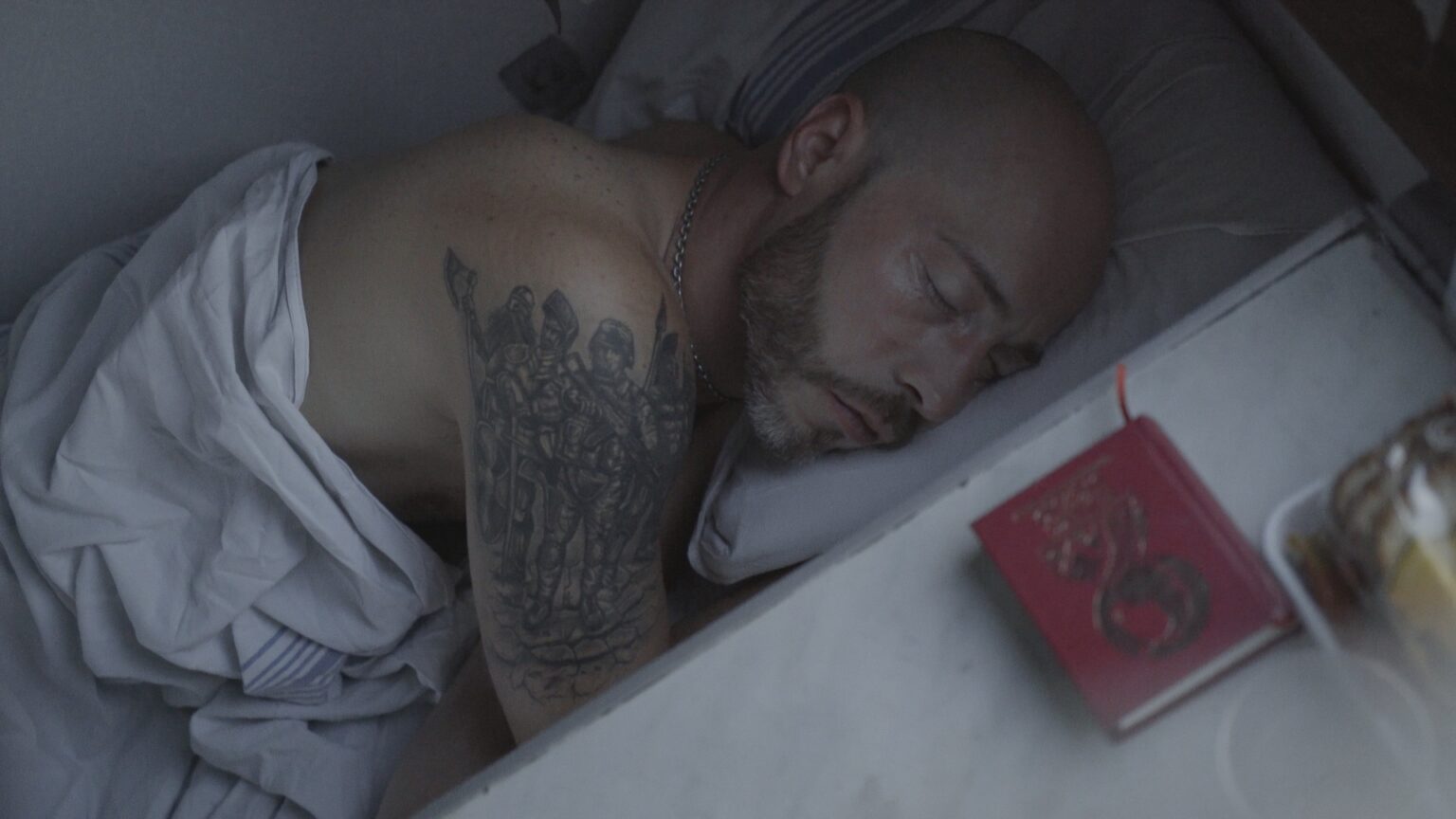
In 1996, a Swedish journalist together with an international expedition group heads to the Amazon rainforest to meet the Korubu tribe – a group of indigenous peoples isolated from the modern world. The expedition’s footage becomes a global sensation. Almost thirty years later director Nathan Grossman travels to the Amazon jungle to once again meet the native tribe. When representatives from the Korubu tribe share their version of the first meeting, the viewers’ perspective also changes. Initial research on the historical material turns into an unexpected confrontation with the past, and the camera increasingly turns towards the filmmakers themselves. Who owns the rights to creating a story? Can documentary film uncover and at the same time repeat colonial power struggles?
According to UN estimates, there are some 500 million indigenous peoples in the world today, living within the territories of 90 different nations. Their way of life, traditions and environment is threatened by economic interests, missionary efforts and diseases brought in by tourists. The UN Declaration on the Rights of Indigenous Peoples (UNDRIP) was only adopted in 2007. The 2022 report by the international human rights organization Human Rights Watch on Brazil indicated that policies implemented by Jair Bolsonaro’s government significantly threatened the sovereignty of the indigenous peoples and the environmental protections of the Amazon.
BECOMING ROOSI
SIIT TA TULEB, ROOSI | DIR. MARGIT LILLAK | 2025 | 84 MIN | ESTONIA, GERMANY | 12+ | BSD 2022
For 10 years the director documented Roosi’s coming-of-age – from a childhood in a remote eco-community to climate advocacy protests in the city. Questions about parental choices alternate with searching for identity, personal challenges, creative experiments and generational responsibility in combating devastating climate change.
The film is an emotionally subtle story about anxiety in the face of inevitable change, the complicated relationship between children and parents, and the determination to find one’s own way in the chaos of the adult world. Alongside serious questions, though, there is no lack of irony and humour – unpredictable situations and sharp conversation with her parents reveal Roosi to be a cheerful and independent personality. The film Becoming Roosi speaks to the freedom to choose one’s own path in life and to consider how much of your parents’ convictions and mission to absorb into your own life.
Record-breaking heat, drought, unprecedented storms, flooding, uncontrollable forest fires are no longer future predictions, but everyday life. The European Climate Risk Assessment (EUCRA) states: today’s political decisions will determine the survival of children and youth, their health and access to clean drinking water and food supplies. Globally some 70% of young people are concerned about climate change, while in Latvia in 2020, a European Commission study found this concern in only 23% of youth. Within Latvian society in general worry about climate change is relatively low – in a 2021 Special Eurobarometer survey only 59% of inhabitant viewed it as a serious problem, the lowest indicator in the EU.
THE BEAUTY OF ERRORS
KAPPALE KAUNEINTA SUOMEA | Dir. Jukka Kärkkäinen | 2026 | 94 min | Finland | 16+
When children grow up their parents have to change too. When Tero’s son Henri falls in love, the father feels betrayed. A sharp, poignant and unexpectedly upbeat story about a family where love is presented through awkward gestures, glances and sighs. The clash between father and son reveals a generational model of inherited masculinity – concern is more often expressed in actions not words, while attachment hides behind sharp remarks.
The everyday routine the characters seem to be stuck in alternates with a picturesque calm accompanied by Finnish pop classics. Like in Aki Kaurismäki’s works with a world full of comic situations, there is no shortage of typical Nordic dark humour. The absurdity of everyday dilemmas reveals human vulnerability and the so-very- familiar desire for understanding and support from loved ones, and the courage to accept one’s own mistakes and those of others. The film doesn’t judge – it is moving in its ability to see the tenderness where loneliness, dependence and everyday difficulties dwell.
Director Jukka Kärkkäinen has been making documentary films since 2003. His films are often centred around people who are ignored by society. He has worked with Tero and Henri before – the 2009 film “The Living Room of the Nation” (Kansakunnan olohuone) is about Tero becoming a father, and in “The Beauty of Errors” he revisits both characters 15 years later. Kärkkäinen admits that the film was inspired by the works of Roy Andersson and Ulrich Zeidler.
KNIFE: THE
LITTLE SINNER
DIR. DARO HANSEN, THOMAS PAPAPETROS | 2026 | 90 MIN | DENMARK | 16+
How to continue living and doing good when the world seems to be going crazy? Daro Hansen’s very personal journey through space and time takes her from Syria to Denmark, Lebanon and Greece. A personal video archive accumulated over the course of twenty years becomes a unique memory card – from first love and forced marriage, to war, migration and family trauma. This is a film about the ability to preserve humanity, closeness and love in a world in which safety is by no means a given.
The director bravely returns to her mother’s story and their complicated relationship, exploring whether the chain of violence passed down through generations can be broken. Sometimes you must dare to examine that which you most want to avoid. Looking back at the past helps to see family ties differently, and find a path to forgiveness, belonging and healing. The film is like meeting a close friend – deep, genuine and without pretence.
Within the EU, Latvia has the highest rates of violence against women and children. According to Ministry of Justice data, in 2025, 2,292 women in Latvia sought temporary protection against violence. Experts acknowledge that statistics can be misleading because many victims are too afraid to seek help. Latvia is also the first EU member state to vote to withdraw from the Council of Europe’s Convention on preventing and combating violence against women and domestic violence less than two years after it was ratified.
MY FAMILY AND OTHER CLOWNS
MINU PERE JA MUUD KLOUNI | DIR. HEILIKA PIKKOV, LIINA SÄRKINEN | 2025 | 84 MIN | ESTONIA | 12+ | BSD 2022
Sometimes we laugh the loudest when we least expect it. For more than 25 years Estonian clowns Piip and Tuut have entertained children and families the world over, but daily life is not always as fun as performing under stage lights. While Piip and Tuut, exhausted, are once again packing for travel in a one-room apartment on the outskirts of Tallinn, their three children are growing up on their own and long for the presence of their parents. Siim has autism, and older sister Emma takes care of him, and of the youngest, Anni.
When the pandemic disrupts their marathon of performances, Piip and Tuut’s creativity becomes the strength needed to adapt to change and retain the ability to experience joy. With heartfelt reverence, the film captures the fragile everyday moments that shape a family’s inter-relationships. Smiles, deep affection and doses of valuable advice guaranteed for the viewer!
Haide and Tomass have performed not only in Europe, but also Australia, the USA, Canada, China, Korea, India and Jordan. Every year they play more than 200 performances. Since 2007 they have been training volunteer clowns at the Dr. Clown Foundation’s Estonian branch. In Latvia, Dr. Clown has been operating since 2012 – specially trained volunteer doctor clowns make more than 1,000 visits per month to children in hospitals in Riga and other regions.
4
ATTEMPTED MURDER
OF SALMAN RUSHDIE
DIR. ALEX GIBNEY | 2026 | 107 MIN | USA | 16+
At the centre of the film is the unbreakable strength to continue creating, despite the death threats. On August 12, 2022, writer Salman Rushdie climbed onstage in NY state to talk about the USA as a safe haven for writers living in exile. After a few seconds an attacker stabbed the writer 15 times. Rushdie was severely injured and lost an eye but survived. Oscar-winning filmmaker Alex Gibney’s documentary follows Rushdie’s recovery process and reveals the most significant waypoints in his biography. The film utilizes previously unpublished personal footage filmed by Rushdie’s wife, poet-photographer Rachel Eliza Griffiths, after the attack.
Knife: The Attempted Murder of Salman Rushdie is a story about the price of the freedom of speech – about what can happen when literary text is declared a threat and a writer’s body becomes a battlefield for ideologies, religious fanaticism and political power.
In 1989, after Iran’s Ayatollah issued a fatwa against Rushdie (a religious ruling with an invitation to kill), the writer spent several years in complete isolation guarded by the Secret Service. The publishers and translators of his works have also been subjected to threats and attacks. The Rushdie situation is not an exception – writers, artists and journalists all over the world are still being jailed, persecuted, physically threatened, killed or forced into exile for their works and publicly stated opinions. The 2025 PEN America study “Freedom to Write Index” recorded at least 401 jailed writers in 44 countries – the highest number since the index was created. In the “Writers at Risk” database there are currently more than 1,000 active cases involving culture and media professionals who are experiencing persecution, attacks or deportation.
BACK TO CONTENTS
FILM PROGRAMME
TECHPLOMACY
DIR. SUSANNE KOVÁCS | 2026 | 93 MIN | DENMARK | 12+
The digital environment is changing at an almost uncontrollable pace, and democratic institutions and regulations can’t keep up. Who will determine what sort of technology will shape our future – democratic values or corporate interests?
Enterprising Dane, Anne Marie Entoft Meldgaard, is one of the first international ambassadors in the field of technology. With Nordic directness and conviction about the importance of human rights and public good she heads to the modern-day “Wild West” – Silicon Valley in the USA – to seek a democratic digital future. How to shape a sustainable digital environment strategy and communicate with tech magnates about protecting human rights? For five years the film crew travels from Palo Alto to Copenhagen, to the UN HQ in Geneva and the G20 summit in Sao Paolo, showing the effort involved in compelling technology to serve people and not profit only.
With the rapidly growing importance of AI, decisions made by the so-called Big Seven company leaders (Alphabet, Amazon, Apple, Meta Platforms, Microsoft, NVIDIA and Tesla), will influence the lives of 8 billion citizens of the world. In July 2026 in Geneva, the first UN Global Dialogue on AI Governance took place, attended by governments, tech companies, civil society and scientists. “Our behavioural patterns and worldview are highly vulnerable to AI systems of influence,” stated Jānis Sārts, director of the NATO Stratcom COE (interview with LSM, on July 31, 2026).
TO DIE TO LIVE
ПОМЕРТИ, ЩОБ ЖИТИ | DIR. YULIIA HONTARUK | 2026 | 120 MIN | UKRAINE, LATVIA, SLOVAKIA | 16+ | BSD 2019
In 2014 when Russia began its occupation of Crimea, three Ukrainian boys – Shakhta, Dancer and Potter – volunteered to fight. After the full-scale invasion in the spring of 2022, they once again returned to the front. The director allows us in close-up to get to know this generation of Ukrainians whose lives are determined by the ruthless struggle for their nation’s existence. Returning to civilian life turns out to be no less complicated. Former soldiers feel alienated from individualistic society and long for the community and clear goals of their experience at the front.
Footage shot over twelve years creates a fragmented and intense cinematic experience, wherein the war’s past merges with the present. The film is about man’s attempt to come to terms with mortality while at the same time maintaining the will to live. “Yuliia’s film reminds us that behind every headline and each statistic are people who carry invisible scars. Its message reaches far beyond the borders of Ukraine; it is about the unseen price of freedom, about the courage to choose life again and again,” states Uldis Cekulis, the film’s co-producer from VFS Films studio.
According to Ukrainian National news agency “Ukrinform” data, more than 71% of Ukraine’s inhabitants have volunteered for national defence and support activities since the Russian invasion. During this period more than 20 members of the Ukrainian film industry have perished at the front lines. “When the full-scale invasion began, everyone was saving children and the elderly, but I grabbed a suitcase full of hard drives,” says director Yuliia Hontaruk – “To Live to Die” was created from more than 1,000 hours of footage and approx. 80 film edit versions.
FILMAS.LV
UKRAINIAN SHERIFFS
DIR. ROMAN BONDARCHUK | 2015 | 85 MIN | UKRAINE, LATVIA, GERMANY | 16+
In the remote Ukrainian village of Stara Zburyivka where official law enforcement rarely visits, the head of the village has found an effective way to combat disorder. He has chosen and appointed two men – the smartest one and the strongest one – as sheriffs. Bearing shiny badges and driving a rickety Zhiguli, this law enforcement team heads to the next routine call – someone had two ducks stolen, a woman has been attacked by an anaconda, the resident homeless person has eaten his neighbour’s dog.
Their regular routine is disrupted by news of war in the border region of nearby Crimea. Factions begin to rage in the village and draft-age men flee from conscription summons, but the head of the village does not lose faith in his fellow villagers’ ability to face hardship. Film director Roman Bondarchuk calls his work a tragi- comedy documentary and hopes that after the war a continuation of the film can be made.
The film was shown in more than 25 festivals worldwide. After the 2022 invasion the Russian Army tortured the head of the village from the film in an attempt to gain information about the resistance movement. He managed to escape and came to Latvia in 2023 to heal from his injuries and his traumatic experience. An exhibition dedicated to the film and the Kherson region will be on display at art station “Dubulti” from September 10th to October 1st.
FILMAS.LV
UNDER THE RED LIGHT
ROMUALDAS IR JŪRA | DIR. JORIS SKUDRA | 2025 | 73 MIN | LITHUANIA | 12+ | BSD 2022
Romualdas Požerskis is one of most renowned photographers in Lithuania. During the Soviet occupation, when it was forbidden to photograph the sea, religion and nakedness, Požerskis documented the yearning for freedom by Lithuanian youth. Tens of thousands of captured moments, a unique perspective, which at the time was prohibited from being displayed. Secretly listening to American rock music at night, unauthorized motorcycle rides by the sea and imagery as a form of protest.
Despite strict Soviet censorship, the photographer captured and immortalized religious rituals, holy pilgrims, Lithuanian rural folk, small- town life and behind the scenes of the local art world. Požerskis’ camera also captured decisive moments in the process of Lithuania regaining its independence. In the artist’s photographs the everyday meets the sacred, revealing the fragility of human relationships, existential loneliness and striving for timelessness.
In the late 1960s in Lithuania, the so-called Lithuanian School of Photography emerged – a documentary, humanistic tradition that focussed on everyday life, the countryside, human relationships and individual experiences, and in doing so distinguished itself from the official, ideologically-construed representation of Soviet reality. The functional significance of this type of photography was also the preservation of Lithuanian national identity and traditional way of life: during the Soviet era, documenting national culture could be deemed to be indirect resistance. The works of Romualdas Požerskis precisely fit into this tradition.
FILMAS.LV
THE QUEEN AND THE SMOKEHOUSE
BAŁTYK | DIR. IGA LIS | 2025 | 65 MIN | POLAND | 12+ | BSD 2024
During the summer Łeba is one of the most popular resort towns in Poland, welcoming hundreds of thousands of visitors. At the centre of the film is Miecia – proprietor of Łeba’s legendary fish smokehouse, whom the locals refer to as Queen of the town. Over the course of more than 40 years of working, she has become an integral part of the town’s landscape. Always with cigarette dangling from the corner of her mouth, Miecia jokes that she has smoked herself along with the fish. The film lets us hear the murmur of the sea and see the spirit of the Baltic shore that is slowly fading under the shiny façade of tourism. The daily work takes on a poetic ritual significance wherein the smokehouse becomes a smoke-filled sanctuary, symbolizing endurance and love of life.
The director finds beauty in the seemingly mundane: work calloused hands and a gaze that simultaneously shows stubbornness and fragility. Miecia’s daily life flows like a carousel in the beachside amusement park – at times energetic and noisy, and also meditative and subdued. Facing health problems, she is forced to go on vacation for the first time in her life and learn to live not just for work, but also for herself. A humorous and deeply moving story, it is especially dangerous for viewers who like fish.
Łeba was first mentioned in historical sources in 1268 as a fishing settlement. During WWII, the German Army conducted missile tests in its territory. Today the town has some 3,000 inhabitants and is situated near the Słowiński Biosphere Reserve, which is listed in the UNESCO list of protected areas and encompasses one of the largest and most active shifting sand dune systems of the Baltic Sea area.
FILMAS.LV
WHERE EVERYTHING DISAPPEARS
DE VSE ZNIKAYE | DIR. OLEKSANDR TKACHENKO | 2026 | 88 MIN | FRANCE, UKRAINE | 16+ | BSD 2023
Ukrainian cinematographer and pacifist Dmytro Dokunov founds an eco-village in a picturesque corner of Ukraine’s mountains. Freely, joyfully and creatively these children of nature tend their homes and gardens, while also meditating, swimming in paradise- like waterfalls and loving life in a way that is only possible with youthful maximalism. However, Dmytro receives a conscription notice from the Ukrainian Army to fight against Russian aggression. He begins shooting a war diary with a mobile phone – footage documenting combat units, fellow comrades, fear and his increasingly bitter attempts at understanding how to be a soldier, as someone who believes in pacifism. When Dmytro is heavily injured in Bakhmut, he seeks refuge and healing in the mountains. The war hero title doesn’t help much. Plagued by painful memories, Dmytro learns to live again and to create an environment where peace prevails.
For 20 years, Ukrainian director, journalist and anthropologist Oleksandr Tkachenko has been producing material for national media and has collaborated with international institutions such as the Council of Europe and EUBAM. He has also worked as an advertising and music video director. “Where Everything Disappears” is his first international feature film that was created as part of the ARTE “Generation Ukraine” initiative. The film’s world premiere took place at FIPADOC 2026 in France. At Docudays UA 2026 it received the Viktor Onysko Memorial Prize for best film editing in a Ukrainian documentary. After finishing the film, Oleksandr joined the Armed Forces of Ukraine.
