Robin Petré: Only on Earth

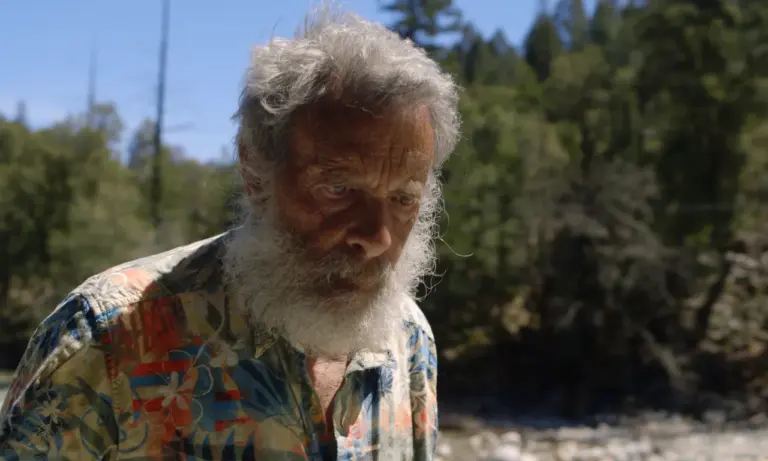
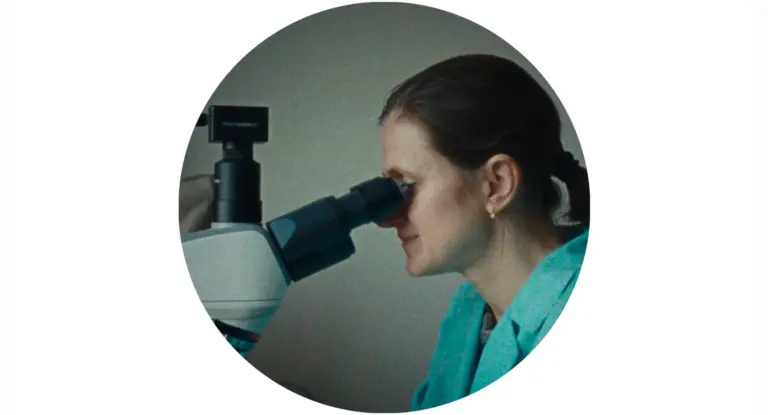
Look at the photo… A douce painting by Edgar Degas, for me the first true documentarian? No, an edited still from a Danish documentary – coproduced with a Spanish company – directed by Robin Petré and with Ecuadorian cameraperson María Goya Barquet behind the camera. I became curious to know more about the latter, went to her website that with photos immediately proved a special talent for giving images an extraordinary poetic stamp that appeals to someone like me, who again and again stresses that documentaries are Films.

Uhh, the film crew has gone very very close into the wild forest fires in Southern Galicia but there are also – understandable! – well composed distant images from the fires, where – it is being said by one of the few but important humans in the film – animals run back into the fire, when they discover human beings. Only on earth, what are we doing to it, the earth?

Impressive camerawork… that we viewers are invited to experience, and get the chance to, through the editing of Charlotte Munch Bengsten, who brings pauses, time to refelect, where they should be and is not afraid to give us some contrasting shocks. Like in a sequence with an experienced fire fighter, who answers the question whether the fires have become different during the years: The sound of the fires have changed, they roar today like beasts – cut to the veterinarian for horses in a swimming pool, then her on a horse, then her at home with a glass of wine, and we stay with humans to meet (again) the boy from the farm, who knows how to groom horses and who gives the film Life, and Hope; he must be one of those in new generations, who with his love to the horses can do better than we can today? Or am I dreaming?

Huge respect to Robin Petré for not wanting to give answers… she raises questions, lets us think and invites us to an area we know very little about. To discover. But also give us information – for instance that the windmills in the landscape have changed the life of the wild horses, it is now more difficult for them to graze. The windmills also bring in my praise of the sound score, performed by Thomas Perez-Pape, it keeps you hooked the whole way through, at a place on earth, where survival of man and nature is at stake. Where there is a lack of balance. I will not forget the image and the sound of the white horse roaring in desperation in the barn. A cry for help. A warning. Indeed!

Denmark, Spain, 2025, premiered in Berlin, awarded at festivals, 93 mins.

DocuDays UA 2025

I am not in Kyiv but I follow what’s going on in a festival that I have visited some times before the war. With pleasure and I have no doubt that the organisers will take good care of every visitor, when Putin arranges a knock back after the Ukrainian success bombing airports and airplane around Russia.

The festival with its attached Industry section is of high quality. There is a section that includes 5 Ukrainian documentaries, they compete and I am happy that I am not a juror. If you read what I have been writing about the 5, you will understand that the jurors will have a difficult task. The films are – go to my reviews – “Songs of Slow Burning Earth” by Olha Zhurba, “Militantropos” by Yelizabeta Smith, Alina Gorlova and Simon Mozghovyi, “My Dear Théo” by Alisa Kovalenko, “In Limbo” by Alina Maksimenko and “Timestamp” by Kateryna Gornostai. Go to “Search” on filmkommentaren.dk and write the title and you will get to the reviews.

DocuDays is an international festival and I am equally happy to see Hungarian “Your Life Without me” (Photo) by Anna Rubi, it has received several awards in Hungary and abroad. And Lithuanian Giedrė Beinoriūtė is here with her beautiful “On Sacred and Profane”, “… Once a year, a quiet and secluded village in the north-western part of Lithuania comes alive to celebrate Catholic Easter, doing its best to preserve the vanishing ancient tradition of the Guardians of the Cross. With gentle humor observing the preparations of the local community for the vigil and immersing the audience in Easter night, the filmmakers raise questions about the relationship between the sacred and profane in modern world.

And so much more… Enjoy!

Kateryna Gornostai: Timestamp

It is the supreme art of the teacher to awaken joy in creative expression and knowledge“, one of many quotes from Albert Einstein that I was thinking of while watching this well made originally thought documentary from Ukraine. Take a look at the still from the film, she is cute, she concentrates on what she and her friends have been told to do. By great teachers who love their job and want to bring the kids the best of the best.

Originally thought… yes, to go to different schools, to meet pupils of different age, see how the teachers “awaken joy”, give them skills to develop creativity and of course learn. Many of the schools have been bombed but then the teacher stands out in the free next to the ruins doing an online lesson in mathematics! Ukraine is at war but teaching continues. Kateryna Gornostai paints a warm picture of the schools, she has visited, joyful, playful most of the time with space for grief as when a girl is in a class room, where there are pictures of soldiers, who died in the war. One of them is her father. A teacher takes care of her – show your father that you can read! Heartbreaking scene.

Also the routine is caught. The sirene is wailing, one of the teachers ask the classes to go to the shelter, they do, time for a break but often the teaching continues downstairs. And there is time to dress up, have your hair set in the right way for the academic graduation ceremony and for the following celebration. Fun. Joy.

BUT there is a war next door and a soldier is in the class room to the students, saying that the war might last long so one day it is your turn to be drafted. Where do you want to go in the army? And there is a sequence from a funeral with father and daughter and wife. Denys in a coffin… Can´t help it, tears come to my eyes.

It is the right choice to put scenes like that towards the end of the film, and let me and other viewers remember having experienced the beauty of dedicated teachers bringing knowledge and inspiration to the small and the bigger. And have the guts to go against the apparent bureaucracy, when a school is to rebuilt and it just takes sooo long. Why the teachers ask the contractor in a scene. We want to do our job in a good location. Of course they do!

Ukraine with support from other countries and the EU, 2025, 2 hours.

DocsBarcelona Notes on Films

Thanks to Filmin I could watch some more documentaries that were shown at DocsBarcelona from a soft armchair in a town at Costa Brava. After the festival. All good, some better than the other of course, some more artistic, some gave me information that I did not have in beforehand. That’s what documentaries can do.

Requiem for a Tribe by Iranian Marjan Khosravi impressed me because the protagonist Hajar is a strong old woman, who fights for her right to stay, where she is and as she is, a nomad taking care of her sheep as she has been doing her whole life. Her sons want to take her to the city, “what should I do there”, she says. The film includes archive from when she was 8 years ago. The tribe is the Bakhtiari from SouthWest Iran, according to the catalogue. Photo: Seven Springs Pictures.

Monk in Pieces by David C. Roberts and Billy Shebar portrays the now 82 year old American performance artist Meredith Monk, who through a long career has composed, directed (opera for instance), mixed the art forms, including films, extraordinary character, avant-gardist and much more, staying with her own signature, a true artist especially when she conveys to us how magnificent an instrument the voice is. Happy to have met her!

Poirot, The Last Witness by Francesc Relea also gives a fine portrait of a photographer, Chilean Luis Poirot, who was there at the Presidential Palace Moneda in Santiago de Chile on the 11th of September 1973. Who made portraits of Victor Jara and continued his work in exile in Spain. The director takes him back to Chile to meet Isabel Allende and to the house of Pablo Neruda at the Pacific Coast – wonderful memories, I was there as well thanks to Alexandra Galvis, Chilean producer and film promoter.

Yelizaveta Smith, Alina Gorlova, Simon Mozgovyi: Militantropos

Milit – lat. for soldier. Antropos – gr. for human: “A persona adopted by humans when entering a state of war. The chaos of war not only tears apart the physical world but also fractures the Militantropos’ sense of self”.

In every way this is a Big film. Monumental. Almost two hours of intensity. Informational and emotional. Let me take the start and the ending:

The sky accompanied by the sounds of explosions. War. A building, an apartment block in fire. A man is looking, a woman is looking. You read their faces, you know what they are thinking – another bombing, another atrocity. An evacuation train to Vienna is announced at the station. People cleaning up the ruins. Some hands pick up photos, family photos, children…

There is war in Ukraine. And there are brave and skilled documentarians documenting what is going on.

At the end of the film there is a focus on a young man, who plays the violin, it’s a party, the group around him sings and dances, I think it is also a wedding party for him, later on we meet him and his partner checking if he has packed all needed – to go to the war. An emotional scene, followed by goodbye scenes at the station, men in uniform and their loved ones, kids.

Before that a long – feels long and must be like that – sequence where family and friends say farewell to a soldier, who came back in a coffin. Denys is his name. Heartbreaking to watch – and then cut to a beautiful shot of a yellow cornfield followed by scenes, where bees are buzzing around, honey is dripping, plants are being watered, melons picked up on the fields and taken away on a motorbike by a young couple. Life goes on. Resistance.

And of course there are scenes with soldiers going around with mine detectors close to where a farmer lives. And evacuation scenes – the woman and a soldier collects her things quickly but the filmmaker stays for a moment to show us her now empty home.

As a film “Militantropos” is excellently shot and edited, looking forward to watch it again. Happy to see the many financial contributors to the Tabor Collective production, the film will thus go around, watch it.

Ukarine, France, Austria, 111 mins.

Deming Chen: Always

If I could, I would take many images from this beautiful documentary and put them on the wall. Most of them B/W images in academy format with many of them colored in blue, yellowish for instance. All is so well composed and thought. Cinema! Images from inside the family’s house with faces difficult to perceive, often enclosed by smoke from the fireplace. Wonderful.

It is poetry and it is about poetry that comes from children in a school in a Chinese mountain area. Their short poems are presented on the images – English translation discreetly in the bottom corner – mostly related to the nature surrounding them but also – at the end – comes a poem that is a “farewell to childhood”. The film has a text in the beginning saying “a letter to childhood” with Gong Yubin as the protagonist. Childhood as it is and should be as long as it lasts.

Gong is a child – see the photo – curious, wants to discover the world, lives with his grandparents and his father, his mother ran away from the hard conditions of the family that has pigs and cows and are farmers, who work hard to make ends meet in the foggy landscape. Do you miss your mother, the director asks Gong, who has built a den of hay, “will answer you later”, he says smiling, a boy who takes his walks alone in the nature, observing, when he is not in school or helping his one-armed father chopping wood.

The government’s propaganda comes out of the loudspeakers in the village, life goes on as always, the grandmother is a strong woman, who interprets the harsh life conditions as fate, when something fails, her husband calls the butcher to come as the pigs “are on hunger strike” (!), grandmother will stop giving Gong pocket money if he uses them on junk food, Gong is with his father in town and gets a bike, if I get it right, normal life conveyed in an extraordinary way. Yes, I write with pleasure: Masterpiece! Visually Magnificent!

China, France, 2025, 80 minutes.

DocsBarcelona Awards 2025

Tonight the winners of the DocsBarcelona festival 2025 were announced at the ceremony at the CCCB, that hosted industry activities duirng the festival and some screenings as well. Here is a copy paste from the festival’s website:

THE FESTIVAL SURPASSES 11,000 ATTENDEES IN ITS PROVISIONAL TALLY AND 800 ACCREDITED PROFESSIONALS

DocsBarcelona today awarded the prizes of its 28th edition at the Centre de Cultura Contemporània de Barcelona (CCCB). Forty-eight films, eleven of them world premieres, contribute to a provisional total—pending the final two days—of 11,000 spectators across the festival’s six venues (the CCCB, Renoir and Phenomena cinemas, the Filmoteca de Catalunya, Casa Montjuïc, and Espai Texas), consolidating the upward trend recorded in 2024, a record year with a 60% increase in attendance. This year, the festival sold out ten screenings and brought around fifty filmmakers to the Catalan capital.

“On this 28th edition, dedicated to archive and memory, we will finish with an 18% increase in in-person attendance. We have added two new venues, reaffirming documentary film as the centerpiece of a cultural space rooted in the city. With forty-one Q&As and enthusiastic public participation, we have generated debate, emotion, and connection. This edition has been a celebration of documentary film as a place for collective reflection and shared experience,” highlights Maria Colomer, Co-Artistic Director and Head of Programming of the festival.

DocsBarcelona Industry, its professional market, has also grown, supporting fifty-eight projects in development and registering over seven hundred professionals from thirty-six countries.

“It is a privilege to see how DocsBarcelona continues to be both a space where professional relationships are forged that directly impact the productions of coming years and a forum for thought and reflection on nonfiction. The market reaffirms itself as the main driving force of the nonfiction industry in Catalonia and Spain,” recalls Èric Motjer, Co-Artistic Director and Head of Industry of DocsBarcelona.

La memoria de las mariposas, a tribute to the indigenous victims of the Peruvian rubber trade, which filmmaker Tatiana Fuentes connects to her own family, crowns this edition’s awards with the Docs Award for Best Film. The Official Jury, composed of Montse Triola, Ana Pfaff, Fito Castillo, and Joost Daamen, praised “the re-signification of images, both in the contemporary context and within the film itself, appealing to historical memory and reparations.The Docs Award for Best Catalan Film went to Grup natural, an empathetic and constructive look at adolescence by Nina Solà. “What initially appears as the portrait of a very specific institution becomes a universal, fun, and fresh film that never infantilizes its protagonists,” reads the verdict of the Docs&Cat Jury, made up of Adrià Lahuerta, Elena Molina, and Adrián Silvestre. Eligible were the Catalan productions in the festival, sponsored by La Xarxa Audiovisual Local (XAL). The Docs Public Award – Moritz also honored a Catalan documentary, Mares, by Ariadna Seuba, the journey toward motherhood of two women, full of hopes and frustrations.

The Official Jury granted three more awards. The Docs New Talent Award – Filmin, reserved for first features, recognized “the vital perspective on a mature and complex relationship in the twilight of both characters” of Two Strangers Trying Not to Kill Each Other, by Jacob Perlmutter and Manon Ouimet. The Docs Antaviana Award went to Timestamp, by Kateryna Gornostai, for “its persistent gaze on future generations of a country at war and its normalization within the educational system,” an homage to the daily struggle of students and teachers to keep schools open amid the war in Ukraine. Always, the beautiful debut by Deming Chen, received one of the festival’s new awards, the Docs Editing Award – AMMAC, “for its precise, observational approach to the ordinary, allowing an extraordinary poetic story to emerge.”

For the first time in the awards lineup, the Docs Journalistic Relevance Award – El Periódicowas presented to The Dialogue Police, by Susanna Edwards, with a Special Mention to Facing War, by Tommy Gulliksen.

Mr Nobody Against Putin, by David Borenstein and Pavel Talankin, a witness to the transformation of a Ural school under Vladimir Putin’s new “patriotic education” policy, received the Amnesty International Catalonia Award, recognizing the film most committed to the defense of human rights.

Youth juries contributed four more winners to the 28th DocsBarcelona lineup. The DOC-U – 16nou Award went to the short Al rojo vivo. The Doc Around Europe Award was given to How Did I Get Here2unbreakable received the Docs&Teens Award by the teenage audience. The Young Jury Award – Reteena went to Khartoum.

Rounding out the awards is the verdict of the 2024 audience from the network of 70 Docs del Mes venues, DocsBarcelona’s circuit programming, which granted the Docs del Mes Award to Echo Of You. The Docs d’Honor Award, presented at the festival’s opening in recognition of the career achievements of outstanding professionals in documentary film history, was this year awarded to German producer Heino Deckert.

DocsBarcelona 2025 Award Winners

  • Docs Award for Best Film: La memoria de las mariposas
  • Docs Award for Best Catalan Film: Grup natural
  • Docs New Talent Award – Filmin: Two Strangers Trying Not to Kill Each Other
  • Docs Antaviana Award: Timestamp
  • Docs Editing Award – AMMAC: Always
  • Docs Journalistic Relevance Award – El Periódico: The Dialogue Police
    – Special Mention: Facing War
  • Docs Public Award – Moritz: Mares
  • DOC-U – 16nou Award: Al rojo vivo
  • Doc Around Europe Award: How Did I Get Here
  • Docs&Teens Award: 2unbreakable
  • Young Jury Award – Reteena: Khartoum
  • Docs del Mes Award: Echo Of You
  • Amnesty International Catalonia Award: Mr Nobody Against Putin
  • Docs d’Honor Award: Heino Decker

DocsBarcelona: Artistic Consultancies

Nine projects took part in this year’s edition of DocsBarcelona’s Artistic Consultancies. It was a pleasure to meet the filmmakers, who came from all over the world: Ukraine, Portugal, India, Italy, France, Azerbaijan, Chile, Uruguay, Montenegro, Colombia, Argentina, Spain! Stories about Life and Love, Pain and Joy, Observation, Construction – rough cuts, early cut, close to post production. What a wonderful world documentaries depict, it’s all out there, go and get it, show, interpret, make it personal.

Conversation. Dialogue. Constructive criticism. Suggestions for improvement. 80 minutes.

It is my impression that the makers all took something to be useful for their further work in the editing room. Thanks to the tutors who turned up well prepared and ready to ask questions and say what they found strong and what was weak.

Thanks so much to the tutors Emma Davie, Cecilia Lidin, Robert Goodman, Montse Bartui and Pol Roig. An extra applause to the latter, who was the master of technique at the location, where 8 of the projects were presented. With zoom images of makers, who could not be present and with makers sitting in sofas responding to the tutors on screen – the three first mentioned. Bartui and Roig being in Barcelona.

I chose a photo from the project “Silence is the Enemy of the Sea” with Evgeny Rodin and Dina Karaman as directors of a film shot in Azerbaijan. Pol Roig was the tutor. Description from catalogue:


Muffled music seeps in through the thick white fog. Inside, people on the iron beds begin to stir awake under their snug wraps. The barred windows of their rooms face the vast, grumbling sea. The on-site radio plays songs in different languages—some are about the Great Mother Sea, in others the sea is a ruthless killer. Wake-up, meal, leisure, and nap time calls are made in Morse code. After meals, the residents lounge in the vast halls on sofas and carpets. They drift away to imaginary seas, ignoring the real one before them…

I did the selection of the projects. The organisation of the session was done perfectly by Claudia Valero. Thank you to all of you.


DocsBarcelona Industry Awards

 DocsBarcelona Industry has announced the winners of the 2025 edition this Thursday evening, with Capitán by Laura Otárola taking home the DocsBarcelona Award for Best Project. The awards ceremony was held at Casa Montjuïc and marks the conclusion of DocsBarcelona Industry, the leading non-fiction market in Southern Europe. This year’s edition brought together more than 750 accredited professionals from around the world for four days of pitching sessions, networking events, and many industry-oriented activities. Discover all the awarded projects:

● DocsBarcelona Best Project Award: Capitán — Laura Otárola
● Special Mention DocsBarcelona Best Project Award: Gaza Sunbirds — Flavia Cappellini ● DocsBarcelona Best New Tech Project Award: There is something in the silence — Patricia Fernández
● Al Jazeera Documentary Channel Co-production Award: Gaza Sunbirds —  Flavia Cappellini
● HBO Europe Best Pitch Award: All we have is us — Aline Juárez
● Music Library Award: Kalari Kid (WT) — Maria Kaur Bedi, Satindar Singh Bedi 
● Antaviana Best Pitch Award: Tokyo Meltdown — María Urquijo
● Women Make Movies Award: Before the Feast — Rajani Mani
● Sónar+D New Tech Pitch Award: Lid Scape — Sebastián Carrasco
● San Sebastian Lau Haizetara Forum Award: Gaza Sunbirds —  Flavia Cappellini
● FipaDoc Award: Capitán — Laura Otárola
● East Doc Platform Award: Berliner — Anna Khazaradze
● MIA DOC Award: Julian Assange: This Is All About You — Etienne Huver
● Dok.fest München Award: When you’re not there — Pol Picas, Marta Sellart
● DOCXS Consultancy Award: Romania vs Romania — Anelise Salan
● CIRCLE Women Doc Accelerator Award: Tokyo Meltdown — María Urquijo
● Nuevas Miradas EICTV Award: La Taca — Mònica Llop
● Doklab Navarra Grant: Barceloneta 1/4 — Alba Maria Sueiro 
 

Guillermo Flórez: Lord Take Me Soon

Gosh, what a film, what a woman, a sad comedy, but also a documentary with a message… Let me give you the precise logline from the website of the director’s company: “Carmen’s life has always been a Quixotesque comedy. Living through a civil war, being a nun, building a new life, divorcing in a conservative society, having several lovers and most of all, never following orders. Now, after 86 years of adventures, Carmen is planning her suicide.”

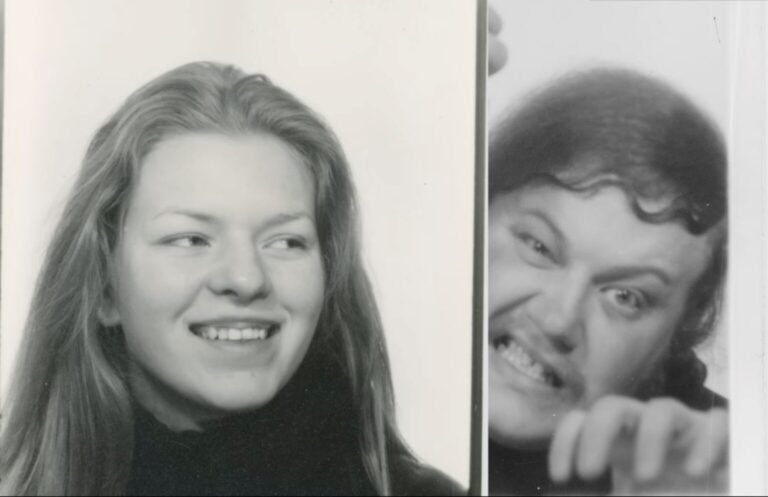
The message: Never follow orders. Live your life fully. She did so, Carmen, and Guillermo Flórez followed her for a year. They established a friendship, she liked that he came to visit, maybe she did not have so many friends; for many she was a rebellious person, always making trouble, as the old lady friend of hers says, when she visits her. Carmen is 86, the old lady 10 years older, and she married the ugliest man in town. A hilarious dialogue scene of many. She meets her son and his wife and daughter, they don’t understand her decision to take her own life. But all is planned, she is distributing her furniture and household goods, she is full of energy and stories that she tells to the director and his camera, often while tearing photos apart from her youth, an attractive woman she was, into the fireplace with the memories so to say. Scenes accompanied by her comments, you understand that she has had an interesting life. “I will cry when you are no longer here”, the director says. “Why, go eat a nice dinner and drink a good glass of wine” is her response in this amazing portrait, a documentary gem simply.

Spain/France, 2025, 70 mins.