ZagrebDox: Watching and Reading the World
A total of 112 carefully curated films within sixteen programs open up a space for encounters between different experiences of reality.
At the press conference ahead of the 22nd edition of the ZagrebDox Documentary Film Festival, its organizers announced the program that will run from April 19 to 26 at the Kaptol Boutique Cinema, amounting to a total of 112 films in sixteen sections. The program revolves around the International Competition, featuring twenty titles, and the Regional Competition, with eighteen films. Together, they proffer a layered and impactful look at a world marked by crises and change, as well as the personal stories that rise above them. The program was presented by artistic director Nenad Puhovski and executive director Hrvoje Pukšec.
“In a moment when five million hours of video are uploaded daily across platforms, when a modest documentary can cost as little as one percent of an Oscar ceremony budget, when newsrooms decide day by day which global war zone they can even afford to cover, and when the line between the artificial and the real is becoming increasingly opaque — programming a documentary festival is more demanding than ever. But that’s also when we can come to a simple realization: we are merely the pre-selectors. We have an audience that doesn’t only trust what we do but knows how to recognize, choose, and evaluate for itself. And that makes things easier. Because — not only at the festival — in this troubled world, we are still together,” said Nenad Puhovski.
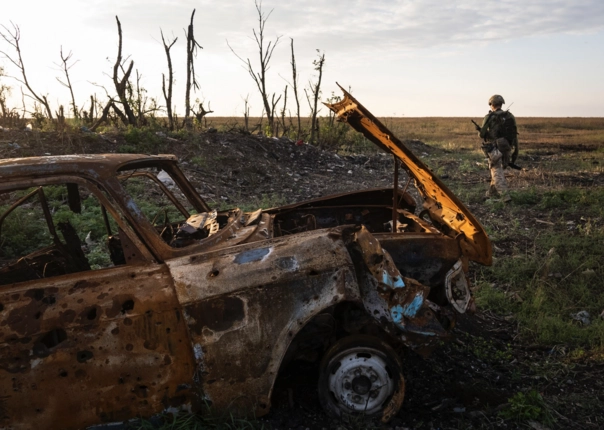
The International Competition comprises films that approach themes of war and its aftermath, memory and trauma, migration and exile, family and social relationships, the status of women, tradition and change within communities, and humanity’s relationship to nature, labor, and technology in today’s world. The war in Ukraine is one of the program’s central themes. In 2000 Meters to Andriivka, Mstyslav Chernov— director of the Oscar-winning 20 Days in Mariupol — once again places his camera at the center of wartime reality, following Ukrainian soldiers attempting to liberate an occupied village. While Chernov remains in the immediate conflict zone, Divia by Dmytro Hreshko turns toward the landscape after destruction, where nature slowly becomes a silent witness and carrier of memory. Between these perspectives is Paleontology Lesson by Sergei Loznitsa, where children at Kyiv’s Natural History Museum find a temporary refuge, as science and imagination attempt to overpower the reality of war. From collective wartime experience, the program moves naturally into more intimate tones. In the autobiographical hybrid film Memory, Vladlena Sandu reconstructs her childhood between Crimea and Grozny, marked by the outbreak of the Chechen war and forced displacement, confronting traumatic memories in an attempt to break cycles of violence passed down through generations. One in a Million by Jack MacInnes and Itab Azzam follows Israa over ten years — from fleeing Syria to building a life in Germany and eventually returning — capturing a coming of age shaped by constant movement between countries, cultures, and temporary homes. New Beginnings by Vivianne Perelmuter and Isabelle Ingold portrays a man attempting to rebuild meaning in his life after the Vietnam War, in a present that continually eludes him. A similar thread of inner fracture runs through A Fox Under a Pink Moon by Mehrdad Oskouei, where a teenage girl documents her attempt to escape a violent environment through her own footage and drawings, turning her life into a space of resistance. All My Sisters by Massoud Bakhshi traces the long arc of three sisters growing up in Tehran, their personal lives gradually intertwining with changes in Iranian society. In response, Cutting Through Rocks by Sara Khaki and Mohammadreza Eyni shifts the focus to rural Iran, where the first elected councilwoman, Sara Shahverdi, challenges patriarchy through political action and everyday resistance. In Flana, Zahraa Ghandour searches for a missing childhood friend, opening a story about violence against women, family loss, and trauma in Baghdad. The position of women is also central to The Men’s Land by Mariam Bakacho Khatchvani, set in a Georgian mountain village where inheritance traditions collide with women demanding change.
Continuing this theme of shifting traditions, Ivan Boiko’s The Wind Blows Wherever It Wants follows Tushetian shepherds and their seasonal migration of thousands of sheep, contrasting an ancient nomadic rhythm with the growing presence of industrial and infrastructural development. The program then moves into quieter, almost meditative spaces. In Better Go Mad in the Wild, Miro Remo observes two isolated brothers whose relationship fractures under the weight of differing desires. Walls – akinni inuk by Sofie Rørdam and Nina Paninnguaq Skydsbjerg explores trust through the relationship between a prisoner and the filmmaker. In Closure, Michał Marczak follows a father who launches his own search along the Vistula River after his son disappears, turning loss into a prolonged confrontation with hope and acceptance. In Confessions of a Mole, a hybrid of documentary and animation, Mo Tan revisits her family home, confronting tradition and her own diagnosis while examining inherited trauma. The program also addresses global economic and technological structures. In Silver, Natalia Koniarz depicts life in Bolivia’s highest mine, questioning the cost of modern wealth and the limits of human endurance. Past Future Continouus by Morteza Ahmadvand and Firouzeh Khosrovani connects Iran and the United States through family archives and exile, where technology becomes the only bridge between separated worlds. In Seablindless, Tereza Smetanová looks at ports and container terminals, revealing moments of intimacy within global maritime trade. In Synthetic Sincerity, Marc Isaacs blends documentary and fiction while exploring attempts to create “authentic” AI characters in a research lab, questioning the boundaries of human emotion and the future of the cinematic image.
The 22nd edition of ZagrebDox takes place at the Kaptol Boutique Cinema from April 19 to 26, 2026. The festival is supported by the City of Zagreb, the Croatian Audiovisual Centre, the Croatian Film Directors’ Guild, and the Zagreb Tourist Board.
