Humphrey Jennings: Listen to Britain

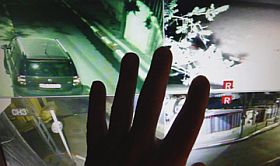
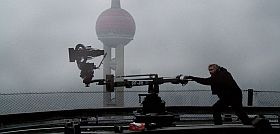
It is still pure pleasure to watch the 17 minutes long short masterly montaged documentary masterpiece by British Jennings, the first of his war-time trilogy. And bravo for the BFI (British Film Institute) for publishing the film, and other films by the director in a double dvd, where the second comes out the 23rd of April.

And also bravo for the Guardian that often brings knowledge about film historical issues to the knowledge of its readers. This is what they wrote as intro to the small clip from the film:

Humphrey Jennings’s work for the Crown Film Unit in the 1940s gives us a fascinating insight into Britain during wartime. Here, in a clip from his 1942 short film Listen to Britain, we get a glimpse of his talent for picking out the details in the lives of ordinary people that was acclaimed by the likes of Lindsay Anderson and Kevin Macdonald.

http://www.guardian.co.uk/film

http://filmstore.bfi.org.uk/acatalog/info_20521.html

Docaviv 2012

The international documentary festival in Tel Aviv, that takes place May 3-12, opens, like the Canadian HotDocs, with Ai WeiWei: Never Sorry by Alison Klayman, and another upcoming hit, Marley by Kevin MacDonald is also offered the Israeli audience.

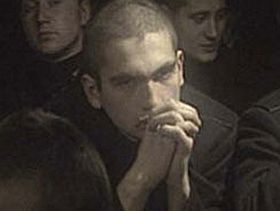
The festival programme includes an Israeli as well as an International and a Student Competition programme, AND a lot of good works in Special Screenings from all over the world. Films to be noticed in the international section is Petr Lom’s Back to the Square, the idfa winner Planet of Snail by Yi Seungjun and the excellent work of master Marcel Lozinski Tonia and her Children (Photo), which has not travelled as much as it deserved.

From the Israeli competition attention should be drawn to the film by Miri and Erez Laufer, One Day after Peace, a cinematic humanistic appeal, here is the catalogue description:

“Can the means used to resolve the conflict in South Africa be applied to the Israeli-Palestinian conflict? Robi Damelin, who experienced both conflicts firsthand, wonders. She was born in South Africa during the apartheid era; later on she lost her son during his service with the Israeli army reserve in the Occupied Territories. She embarked on a journey back to South Africa to learn more about the country’s Truth and Reconciliation Commission established to overcome years of enmity. Damelin’s thought-provoking journey is driven by deep personal pain and a strong belief that a better future is possible.”

Other films that will please the audience are Audrius Stonys Ramain, Steve James The Interrupters, Alina Rudnitskaya’s I will forget this Day and Sean MacAllister’s The Reluctant Revolutionary 

http://www.docaviv.co.il/en/2012

Petr Lom: Back to the Square

Of course the director goes back to the Tahrir Square in Cairo, the symbolic location for the Egyptian revolution but one of the many qualities of this new documentary by world travelling Petr Lom – a director who in his approach is an excellent example of how questioning journalism and observing documentary can be beautifully combined – is that he goes to the countryside, to the places that we did not see in the news reports or in the many films that have been released about Tahrir Square and what happened during the dramatic days in early 2011.

Lom gives the viewer ”five stories from the Egyptian revolution”, a revolution that did not do good for everybody, not at all, on the contrary, the film says by presenting to the audience interesting characters, who do not hesitate to speak out their frustration and anger. Not only the boy on the picture whose family almost lost their business fundament as pyramid tourist guides when their horses were kind of confiscated but also the minibus driver and the young woman, whose husband is in prison without court case – it is a film about corruption in the police and in the army, not to talk about human rights being neglected.

Two stories stand out in the film that of course, having chosen to focus on five stories, in some cases leave the characters at a moment where you would have loved to stay. One is the terrible case of a strong young woman, accused of having an affair with a man, being forced to take a virgin test, undergo torture, her family going against her, as well as the village security officer, who enters the room while filming is going on, asking all kind of questions and stating the the film crew ”could be Israelis”! At the end of that chapter she is in the car of the film crew away from provincialism. The other is the touching and painful story about a young man, whose brother is sentenced to 3 years of prison because of blogging words that the army did not improve of. The brother is on hunger strike, a later text declares that he is now released.

You might argue that it is too much for one film, and that the final film sometimes seems to get out of balance, but this is the place where it can only be repeated that Contents is King. 

Norway,Piraya Films, 2012, 83 mins.

http://www.backtothesquare.com/#/english/film/about

Svetoslav Draganov: City of Dreams

Bulgarian documentarian Svetoslav Draganov has a special touch, when it comes to catch so-called ordinary life as it is lived in his own country, very often in provincial cities. His gift is to make people and their dreams of a better life, or of fame or of success, interesting for the viewer, and he does so with an eye for situations and with a positive and warm approach to his characters, never wanting to judge or to make fun of them. Well the audience is invited to have many smiles and there is definitely a satirical tone, but it is never sarchastic.

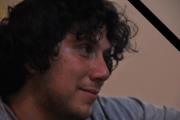
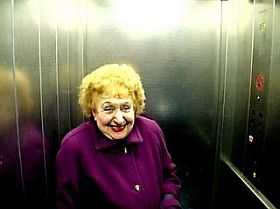
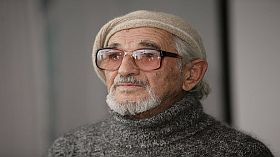
Life is wonderful, isn’t it – was the title of a previous film of Draganov, and the people in Dimitrovgrad aim at the same, to make life wonderful. They did so when the city was meant to be a communist model city (the film has wonderful b/w propaganda archive material from the Stalinistic times), and they do so today in a city where music plays a strong role for many. It is called chalga, pop-folk Bulgarian style, most often performed by young girls in very short skirts, who do not hesitate to show their talented bodies. The focus is on sweet Simona, who moved with her parents to the city to reach the stars, fighting hard to have her first record out accompanied by a music video, supported by her boy friend and (to a certain degree) by her mum and dad. Helping her is the former rock star, who is now a music producer (the bald man on the photo) and who seems to be ”the spokesman” of the director composing a piece that brings the melancholic tone and lyrics like ”you no longer have dream… all there is back is sorrow”. Actually a pretty good earhanger.

Draganov uses a mosaic storytelling structure which gives the broader picture of then and now, past and present. He has fabulous moments with meetings of the old brigadiers who built the city, he creates a drama between a father and a son, who is opposed to the communist past, he gets close to Simona and the bald music producer and his family. And yet the danger of having a structure like that is that you often want to stay longer with one character or go deeper, but then you are brought to the next one. Sometimes – like with Simona – emotions are conveyed, other times, like with the son of the composer, you would have loved to have more. Nevertheless, respect for Draganov, happy for what he is giving the viewer, a director who has found his personal style and method of observation of human life. 

Bulgaria, 2012, 75 mins.

http://www.cine-ma.com/

http://www.eastsilver.net/en/east-silver/guests/draganov-svetoslav-6037/?aYear=2011&off=25

Hot Docs 2012 – and NFB Cuts

The Canadian International Documentary Festival that takes place April 26-May 6 and that describes itself, and its selected films, as ”outspoken and outstanding”, has launched its programme and it is indeed an amazing selection of films in variety of themes and geography. Contrary to many American festivals the Toronto-based doc fest is really going to all continents to present films from smaller regions. There are sections like ”Made in Southeastern Europe”, and there are films from the Baltic region like the Estonian fine portrait of a chimney sweep, a woman, Breath by Kular Viimne, and Lithuanian beautiful debut film ”The field of Magic” by Mindaugas Survila. To be found in sections titled ”International Spectrum” and ”World Showcase”.

And there are great films written about on this site like: Private Universe by Czech Helena Trestikova, Five Broken Cameras by Guy Davidi and Ema Burnat, and Vivan las antipodas by Viktor Kossakovsky.

And ”star” films like the one that opens the festival Ai Wei: Never Sorry (photo) by Alison Kleiman and Kevin MacDonald’s Marley.

A special tribute is given to Michel Brault, one of the pioneers of Canadian documentary. Among the shown is the classic Pour La Suite du Monde that he made with Pierre Perrault in 1963. This film, thanks to the brilliant NFB online catalogue, you can watch free of charge, link below. Sad news about the NFB (National Film Board), according to Realscreen, is ” In the wake of the Canadian federal government’s budget, released last Thursday and which called for cuts to the budgets of the National Film Board of Canada (NFB), the CBC and Telefilm Canada, the NFB has unveiled several measures that will be implemented over the course of the year, including job cuts, cinema closures, and the reduction of the scope of the Filmmaker Assistance Program (FAP) and the Aide au cinéma indépendant du Canada (ACIC) program.

http://www.hotdocs.ca/

http://blog.nfb.ca/2011/04/07/pour-la-suite-du-monde-the-perrault-classic-in-english/

http://realscreen.com/2012/04/04/nfb-to-reduce-scope-of-filmmaker-assistance-program-cut-jobs-in-wake-of-budget-cuts/#ixzz1rkFO6bRv


Diane Weyermann

Hot Docs gives a Doc Mogul Award every year and there shall be no objection, not at all, on the contrary, to the choice of recipient this year. For this blogger, when he was at EDN (European Documentary Network), Diane Weyermann was a key person for the development of the documentary scene in a new and free Eastern Europe way back in the middle of the 1990’s. She came to many of the EDN workshops in the region and she was precise, warm and generous in her support to documentary films when she launched the Soros Documentary Fund in 1996. Personally I remember having made an interview for DOX with Diane in New York and met a committed and modest person with a big love to the creative documentary. And a woman with a working and walking pace (down the streets of Manhattan) that was quite different from the Nordic tradition! She managed to transform the Soros Documentary Fund into the Sundance Documentary Fund before she went to (taken from the HotDocs site) “Participant Media, where she has overseen such documentary projects as the Academy Award-nominated and Emmy-winning FOOD INC., WAITING FOR “SUPERMAN”, STANDARD OPERATING PROCEDURE, JIMMY CARTER MAN FROM PLAINS, DARFUR NOW, and the Academy Award-winning AN INCONVENIENT TRUTH.” In the funds and in the company, Weyermann has been involved with the production of over 300 documentary films from around the world. The most well deserved documentary recognition I could think of. Congratulations!

http://www.hotdocs.ca/

Laura Poitras

Shocking reading, taken from the Indiewire Newsletter: This weekend, in a post on his popular political blog, Salon’s Glenn Greenwald posted a story about the ways that the Department of Homeland Security has routinely intimidated and violated the fourth amendment rights of documentary filmmaker Laura Poitras (photo), who is currently at work on the third of her three post-9/11 documentaries (following the Oscar-nominated “My Country, My Country” and the critically acclaimed “The Oath“).  According to Greenwald, “Poitras is now forced to take extreme steps — ones that hamper her ability to do her work — to ensure that she can engage in her journalism and produce her films without the U.S. Government intruding into everything she is doing. She now avoids traveling with any electronic devices.”

From the Cinema Eye organization an open letter has been released to the Obama administration:

As members of the nonfiction filmmaking community, we want to express our outrage over the ongoing harassment of our colleague Laura Poitras by the US government and the Department of Homeland Security. We call on the Obama administration to investigate this abuse of power and to bring an end to this persistent violation of

America’s bedrock principle of a free press.

Laura Poitras is one of America’s most important nonfiction filmmakers, the recipient of the 2011 Cinema Eye Honor for Outstanding Achievement in Direction for her landmark film, The Oath, and the chair of our Filmmaker Advisory Board. She was nominated for a Best Documentary Feature Oscar and twice has been nominated for an Independent Spirit Award for her work. Her long list of credits, awards and impeccable credentials would be easy for anyone to verify.

Over the course of the last several years, as Laura has been working to chronicle the post-9/11 world and the effect of American policies here and abroad, she has been repeatedly harassed, detained, interrogated and has had her cameras and computers seized by Homeland Security officials as she attempts to re-enter her home country.

Not once in more than three dozen detentions and interrogations has Homeland Security found anything to justify this chronic abuse of power.

Within the last week, as Laura was returning from a recent trip abroad, she was once again detained. This time, however, she was also threatened with being handcuffed for attempting to take notes during her interrogation.

Nonfiction filmmakers perform a vital role in a democratic society, serving as observers and investigators of the world around us. It is unacceptable for any American nonfiction filmmaker or journalist to be treated in this manner. They must be able to return to their own country without fear of arrest or fear that their work product will be seized, solely because they are investigating or chronicling subject matter that may be sensitive or controversial.

We ask other members of the nonfiction film and journalism communities to protest this affront to a free press and we reiterate our call on the Obama administration to end these draconian and un-American policies once and for all.

Sincerely,

Sean Farnel, Andrea Meditch, Esther Robinson, AJ Schnack and Nathan Truesdell

Cinema Eye Honors Executive Board

http://www.indiewire.com/

Making Documentaries in Israel: The External Eye

Midnight East, the Israeli online magazine “dedicated to obsessive involvement with the Israeli cultural scene”, has published a long, precise and informative article by Ayelet Dekel based on interviews with three mentors, two from the North of Europe and one from Israel. Here is the beginning of the article, go to the link and read the rest:

“I have read 102 Israeli projects, 20 of them have been selected for Copro and these are the people we are talking to here,” said Tue Steen Müller, one of three mentors in the Master Class for Israeli documentary filmmakers that took place from March 18 – 20, “That’s a lot. Reading these 102, and looking at the clips, it’s like looking at the soul of a nation.”

Promoting the making of Israeli documentaries as an independent marketing channel for the past 13 years, CoPro’s main event is the Israeli Documentary Screen Market which will take place from May 29 – June 3, 2012. In preparation for pitching their projects to an international panel of television network executives and other industry professionals, the filmmakers selected to participate had the benefit of individual consultations with three mentors: Tue Steen Müller, Iikka Vehkalahti and Erez Laufer. Midnight East had the privilege of conversing with all three consultants individually, between their sessions with the filmmakers…. Continue on… midnighteast.com

Photo: The Collaborator and his family by Ruthie Shatz and Adi Barash.

Werner Herzog: Ned i afgrunden

Anmeldelserne forlanger simpelthen, at man finder frem til en biograf, hvor filmen vises:


EN MEDMENNESKELIG NYSGERRIGHED 

”Til at begynde med virker Herzogs anti-form næsten demonstrativt umoderne. Men efterhånden som flere talende ansigter afleverer deres vidnesbyrd, efterhånden som filmens tema bliver belyst, giver formen mening…”

”Werner Herzog har tydeligvis opbygget en form for tillid og forståelse med de mennesker, han taler med i ‘Ned i afgrunden’. Måske fornemmer hans interviewofre en medmenneskelig nysgerrighed i stedet for en journalistisk professionalisme hos Herzog. I hvert fald sker der noget forbavsende, da præsten Richard Lopez lige har fortalt om det græs, de køer og de egern, der fylder hver af hans dage med glæde. ‘Kan du fortælle om de egern?’ spørger Herzog, og som tilskuer sidder man og tænker på hvad dælen det er for at bizart spørgsmål, men knap er præsten færdig med at beskrive de frejdige gnavere før han sammenligner dem med de mænd, han be’r den sidste bøn for – og så bryder han ud i tårer. Var det Herzogs sjette sans, der slog til?” (Per Juul Carlsen)

HVER FILM SOM KAMMERMUSIK

“Herzog er (ved siden af en fortsat, men svækket række spillefilm, red.)… blevet en myreflittig dokumentarist, der i essayistisk form undersøger alle mulige emner, som optager ham: renæssancemusik, alternativ luftfart, buddhistisk fordybelse, menneskers overlevelse på udsatte steder, idealisters store selvbedrag og lejlighedsvise sejre. Herzog anbringer sig selv i billedet, interviewer, kommenterer, reflekterer og strukturerer hver film som kammermusik.”

”Into the Abyss bærer undertitlen ’A Tale of Death, A Tale of Life’. Sagen er dødsstraf, og Herzog gør emnet konkret ved at analysere en amerikansk forbrydelse i alle faser af forløbet. Tonefaldet er langtfra lidenskabeligt. Filmen er en disciplineret øvelse i at anskueliggøre et problem, så tilskueren selv kan tage stilling, men må være gjort af forstokket stof for ikke at reagere på dét, som Herzog har vist ham.” (Bo Green Jensen)

I DET MILDESTE TONELEJE

”Med sin læspende tyske accent lyder Herzog som en parodi på Djævlens advokat, men faktisk er han en beundringsværdig interviewer, der stiller alle de rigtige, fordomsfri og svære spørgsmål til en række hårdt prøvede mennesker. Hans instinkt for at trykke på skjulte knapper i det mildeste toneleje er forbløffende. Det sker med spørgsmål, som kvalificerer undersøgelsen, snarere end de søger kontante svar. Herzog gør, hvad han altid gør: vælger et blødt punkt og graver sig ind i menneskelivets verden. Hvad han finder dernede i små og store afgrunde, er hvad han viser frem. Så må vi selv blive klogere. Hvis vi da synes, dét er en pointe.” (Kim Skotte)

Werner Herzog: Ned i afgrunden (Into the Abyss), USA, Storbritannien og Tyskland 2011. 106 min. Fotografi: Peter Zeitlinger. Dansk distribution DOXBIO www.doxbio.dk Litt.: Per Juul Carlsen, Filmland 4.4.2012, Bo Green Jensen, Weekendavisen 4.4.2012, Kim Skotte, Politiken 4.4.2012. 

Filmen havde premiere i aftes ved en enkelt samtidig visning i 50 biografer. Og fra i dag kan den ses i Café-Biografen i Odense og i Grand i København.

The freedom to see

Emma Davie, Scottish filmmaker and teacher at Edinburgh College of Art, and tutor at numerous workshops for filmmakers from Europe and elsewhere, was in Ramallah at the Storydoc/Ramallah.doc workshop that has previously been reported from on this site. She has generously given us permission to post this beautiful text:

THE FREEDOM TO SEE

by Emma Davie

It’s a bar in Ramallah called Beit Aneesh. Apparently named after an old lady that lived there. A laid back place with posters from the history of the struggle of the Palestinian people. We had just completed a documentary workshop in Ramallah and Tue (Steen Müller), who has helped so many emerging filmmakers from all over the world, suggested anyone who likes, joins us for a beer or coffee at 8.

Few have come. Most have long, unpredictable journeys through the occupied territories where they will undoubtedly be stopped several times.

Khaled (Jarrar) has turned up though – just arrived from France where his work as a radical conceptual artist has become celebrated. We’re so pleased to see him – a filmmaker of huge promise as well as an artist. Tue has just seen the rough cut of his first film which is about the wall. He shows us a scene with him with a tiny chisel, chipping little bits of the wall off. Tue suggests he end his new film like this. It’s a futile act of defiance, made funny by its impotence. Khaled is also funny and strong in a way that only gentle people can be. I had seen scenes from his film the year before when we were working with him at the Storydoc workshop in Greece. I remember a mother and daughter who could not see each other due to the wall which now carves right through between the West Bank and Jerusalem, splitting up areas. They were forced to slip photos and letters under it to each other. I remember them touching hands through a gap under the wall.

I also remember seeing a boy pushing bread through one of the holes on the wall. What struck me was not the bizarre act itself, but the look on

the boy’s face when caught by the camera’s gaze. Maybe I imagined it, but the look seemed to see himself from outside for a split second, acknowledging the weirdness which had transformed everyone’s life in this country of zones and codes and divisions and passes and discriminations and humiliations – and the wall.

We had seen it earlier that evening. George Khleifi, a local producer and the organiser of Ramallah.doc, had taken us to see how it lacerated the place in two, cutting through roads to Jerusalem which had been the main roads to see relatives, loved ones and to travel to work.

In the dark we deciphered words which had been written across the top by a South African visiting artist.

“We are the children of our histories. Yet we may also choose to be struck by the stories of others. Perhaps this ability is what is called morality. We cannot always act upon what we see but we always have the freedom to see and to be moved”?

Ramallah is a big jail. It is worse than we could have imagined.

George tells us how the wall came up. He explains it is like experiments done on laboratory animals. You get them used to their new captivity gradually. So the wall started with gaps through which people could pass freely. Bit by bit more was erected until the whole thing was up, making the flow of daily life almost impossible. Of course the situation was already bad for any Palestinian in varying degrees. George told us how he was a 5 star occupied person- meaning his family were in Jerusalem in ’48 so he had an Israeli passport and can travel with more freedom and use the main roads to Tel Aviv – most Palestinians are not able to use these roads. What happens if they try? I ask the taxi driver the next day. They get shot at. Most of the people on the workshop were 3 star occupied persons – living in Ramallah or the West Bank. Of course the worst situation is for the Gaza inhabitants- George called them minus two stars.

We saw the check point through which the Palestinians in Ramallah who can travel to Jerusalem for work, have to pass through. It is the only way for them to get their much needed jobs. They have to get there at about 2 or 3 in the morning and queue in order to get through the tiny single metal turnstile in time for work the next day. They repeat this every day with little time for sleep or seeing family.

We used these turnstiles to get to Jerusalem the next day. Maral Quttieneh, a local producer, gives us a tour. Her family were one of the oldest families in Jerusalem she tells us, they used to own 350 houses. All were taken from them in ‘48. She, though, like George is a 5 star occupied person able to travel from Jerusalem. However, when she was away in Paris studying, after a few years she was warned if she didn’t return, her current home would also be taken from her. She shows us home after home where Palestinians lived, grand homes in leafy areas, now belonging to Israelis. She tells us of families who all over again are being evicted from the homes they moved to after being expelled from their original houses. They now have to make way for new Orthodox Israeli immigrants from Russia and Eastern Europe.

It’s Spring in Ramallah. In the centre of the town some of the women from the countryside are selling fresh herbs and mint and boys seem to spin some thin bread out of air. George explains how it was once green, how olive trees were here and an orchard there. Now it is a huge concrete building site made bearable by the good humour and generosity of those living there. George’s own family were Greek Orthodox. He shows us the yellow lights of the ever growing settlements on the hilltops around Ramallah. More walls. More divisions and a huge infrastructure of roads and walls and fences and soldiers to support and protect them. I hear of farmers who can’t get near their land to cultivate it any more as these settlements or the roads cut them off. I heard of a man who loved to walk in the hills around Ramallah and was shot dead by soldiers. A father of 3.

The day I head for the airport, the papers report how a group of Jerusalem football fans run amok in a shopping mall climbing all over the chairs and tables, aggressing Palestinian cleaners there and shouting slogans “Death to all Arabs”. No-one was arrested. No police stopped them. I imagine these same cleaners must probably have got up at 3 am to get to work. There is no commentary in the paper.

I start to feel like the boy who has been caught by Khaled’s camera. The transgressive has become so normalized that we are all stunned and don’t respond. Of course what is so shocking in Palestine is not what the Israeli Government does but what the rest of our Governments tacitly endorse. This is the week that America has voted against the UN move even to have an enquiry into the affects of the settlements on the Palestinians.

I tell the taxi driver of Khaled’s art project, to stamp passports with Palestinian stamps and how I wanted to do it last time I saw him but this time on arriving at Tel Aviv airport, was stopped 3 times and questioned so aggressively by Israeli passport officials, that I decided against it. I feel cowardly now and think of the daily hassles my Palestinian friends have. Maral told me how she makes the soldiers who go through all her stuff, put it back exactly as it was. Small triumphs in the face of petty brutality. So what can we do to help you ? I ask the taxi driver. Tell people, he said.

Tel Aviv airport book shop is full of lovely picture books of Israel and the countryside. I feel I am walking through a vast shared hallucination. I think of the filmmakers I have been working with, of their hushed, insistent need to tell, of the yellow lights of the settlements on the tops of the hills- of the hands touching under the wall, of all the stories which we so need to hear.

Emma Davie